Sell a Damaged or Broken Car
Get an instant quote from trusted buyers
What is a Head Gasket?
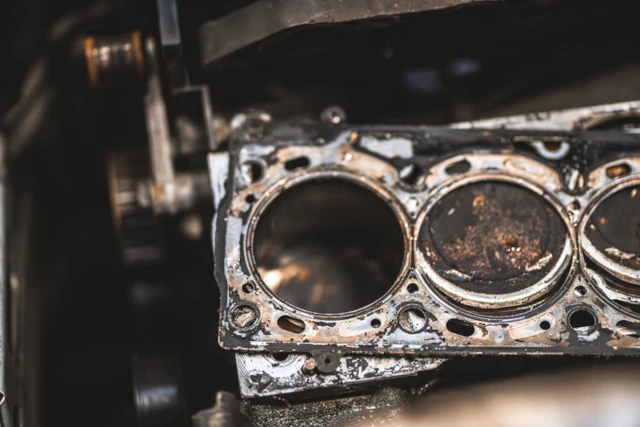
The head gasket is found between the engine block and the cylinder head, and provides a vital seal to ensure that no coolant or oil mixes together. It also ensures that no liquids make their way from the engine and into the cylinders, and it also confines the high-pressure explosions into the cylinders so the engine produces as much power as possible.
How Much Does a Head Gasket Repair Cost?
Typical UK Price Ranges
Repairs for a head gasket are not cheap, and can start at £500 ranging up to well over £2,000 depending on the make and model of your specific car. The cost of the part itself is often not too high, ranging from around £50 to £150, but the job of repairing one is very labour intensive, and can take at least eight hours of work. With notoriously high labour costs involved in car repairs, this is what pushes the prices up for any work.
Costs by Car Make
| Make | Average repair cost |
| Volvo | £522 |
| Citroen | £634 |
| Renault | £648 |
| Suzuki | £700 |
| MINI | £700 |
| Ford | £733 |
| Nissan | £758 |
| Peugeot | £820 |
| Vauxhall | £823 |
| BMW | £823 |
| Toyota | £885 |
| Audi | £926 |
| Honda | £950 |
| Mercedes-Benz | £996 |
| Saab | £1,000 |
| MG | £1,350 |
| Land Rover | £1,377 |
Method: We took the average repair price per manufacturer from Checkatrade, WhoCanFixMyCar and Airtasker. We then calculated the average of these figures to achieve the price listed in the table above. Individual pricing for specific makes and models can vary dramatically, so this is just a general guide based on the information available.
Costs by Engine Type
| Engine Configuration | Type of Car | Average Repair Cost | Why? |
| Inline 3 or Inline 4 | Hatchbacks, small SUVs | £500-£1,200 | With just one cylinder head, these engines require the least amount of work to break down before the work can be carried out. |
| V6/V8s | Sports cars, large exec saloons, premium 4x4s | £1,400-£2,500+ | Because the engine is in a V shape, it has two separate banks and due to the complex nature can sometimes require the engine to be lifted out of the car first. Some garages may suggest changing both gaskets when one blows, which can increase the quote. |
| Boxer | Porsche/Subaru | £1,500-£2,800+ | Because the cylinders of a Boxer engine lie horizontally, there is very little room to work on it inside the engine bay. In some cases, it can require the entire engine to be removed from the car to be able to access the head gasket before any work can take place. |
What Pushes the Bill Up
The reason the bill gets pushed up the most is due to the labour-intensive nature of repairing a blown head gasket. Some engine types are harder to get to themselves, let alone the act of actually replacing a head gasket. In many cases, because you’re needing to have the engine taken apart anyway, it makes sense to replace the water pump or timing belt or chain. This will likely add between £200-£450, but you won’t have to factor in the additional labour cost to break down and rebuild the engine, which you would have to do if this was done separately.
The level of damage can also push your repair bill up. If your cylinder head has warped due to overheating, then you’ll need to have it machined back so it fits correctly. This alone can cost £80. It’s a similar case with cylinder head bolts. These cannot be repaired so you’ll be paying in the region of £50-£100 for replacement bolts.
Finally, if you’re running a diesel engine, you’re more likely to see higher costs when repairing a head gasket. On average, a diesel repair job will run around £300-£400 more than that of a petrol engine. This is because diesels operate at much higher pressures and temperatures. As a result, the parts are heavier, more complex, and more difficult to disassemble, adding to your labour costs.
Signs Your Head Gasket Has Failed
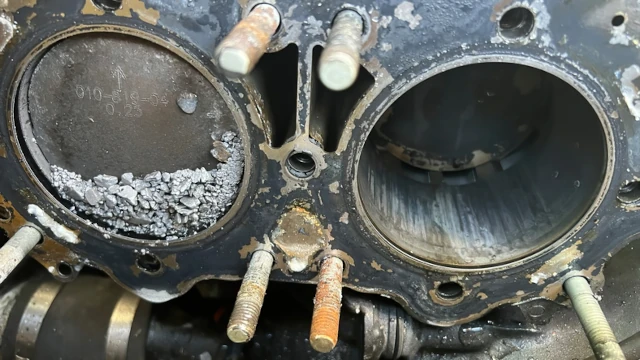
A telltale sign of head gasket failure is your car overheating. With the seal compromised, a coolant leak means your engine is unable to keep itself cool, causing temperatures to rise quickly. You may also see white exhaust smoke as the coolant flows into the hot combustion chamber and evaporates.
Another big sign of a blown gasket is a milky or white look to your oil. If you see a milky substance around your dipstick or oil chamber, it tends to suggest that coolant has got into your oil. If this is the case, then you should visit your garage as soon as possible.
Confirming the Diagnosis Before You Pay
Before you get a garage to carry out one of the most expensive fixes going, make sure you’re absolutely certain it’s a blown head gasket. Checking the condition of your head gasket is quite simple, and just requires you to pop your bonnet and have a look inside. Locate the oil filler cap and remove it. If the underside of the cap is dry, then you’re not looking at any problems, but if you discover there is a brownish-yellow, milky substance – that looks like an unappetising milkshake – then you’re likely to have a problem with your gasket.
If your car is beginning to overheat, it doesn’t automatically mean you need a new head gasket, but you must rectify the problem as soon as possible. Sometimes overheating can be attributed to a coolant leak through a cracked hose, or even a blocked radiator. Check these as soon as possible to not only save your head gasket but also potentially your bank account.
What Causes a Head Gasket to Fail
The main cause of head gasket failure is an overheating engine. Whether caused by a leaking radiator, broken water pump, low coolant levels or even a stuck thermostat, rising temperatures causes the engine block and the cylinder head to expand at different rates. This discrepancy will then warp or crack the cylinder head, which can cause the head gasket to break or even blow out under the pressure. This can also be caused by thermal shock, which is often caused when an overheating car dumps freezing cold water into the radiator expansion tank. The mental contracts, warping the cylinder head and breaking the head gasket seal.
Other causes include fuel inside the cylinders igniting at the wrong point, which causes abnormal combustion waves and in turn violent spikes in cylinder pressure and intense localised heat. This can then punch holes through the armoured fire rings, which allows gases to escape. Age and high mileage can also be a common problem, particularly in older cars. Older vehicles use composite or asbestos-free paper head gaskets which can break down over time. More modern vehicles use Multi-Layer-Steel (MLS) gaskets, which are much more reliable over time.
Finally, in some cases, it may be the design of the engine itself that is flawed. This is particularly known on early versions of the 1-litre three-cylinder Ford EcoBoost engine. So much was this a known fault that it even earned itself the nickname of “EcoBoom”. The small block was fitted with a turbocharger and was subjected to immense thermal stress and pressure loads, with a very fragile cooling system that saw plastic coolant pipes cracking under the engine vibrations. These hoses were recalled to be replaced with plastic hoses.
Can You Drive With a Blown Head Gasket?
No, you should never drive if your head gasket has blown. Doing so risks a total engine meltdown within minutes. If your coolant leaks out while driving, there is no way for the engine to cool down, which will see a sharp rise in temperatures. This can then warp the cylinder head beyond repair.
You could also suffer hydro-locking if you drive with a known blown head gasket. The residual pressure of the engine, while stopped, will result in coolant entering the cylinders. As you try to start the engine, the pistons will slam into this liquid and instantly bend or break the connecting rods, shattering the engine block.
If your coolant has mixed with oil, it will create a thick, milky sludge. This sludge completely removes the lubricating property of oil, meaning your engine is now having to endure metal-on-metal friction. This friction rises the temperature, which in turn causes the bearings to overheat and can completely seize up the engine.
Do Head Gasket Sealers Work?
Head gasket sealer is a short-term fix, but will never fully make the problem go away. It is a liquid that works its way around the gasket to find any gaps. Any gaps it finds are then filled using targeting chemicals. Head gasket sealer is readily available from most car parts shops, whether it’s the local auto centre or a national chain, and is likely to set you back anywhere between £10 and £60 depending on the brand and bottle size.
Ways to Keep the Bill Down
We asked our in-house end-of-life automotive expert, Matt Clamp, how he would keep the cost of a head gasket repair down, and here’s what he had to say:
“There’s no getting around the fact that a head gasket repair is an expensive job, but if you can catch it early enough, you might be able to avoid the machining fee. Don’t drive the car if you see any signs of overheating or milky substances around your oil filler cap. You can also save a lot of money by shopping around and going to a reputable local independent garage, rather than a manufacturer’s main dealer. Always asked for a fixed quote if you can, and not just an estimate. While you can try and avoid the labour costs by doing it yourself, this is very much advanced mechanics and should only be attempted by someone who knows what they’re doing.
Another way to save money, and this may sound counterintuitive, is to spend more money. Your mechanic will have to strip your engine to be able to repair a head gasket, and the chances are if your head gasket is gone, you’re likely to be needing a new timing chain or water pump soon, too. Save on extra labour costs further down the road by getting them to replace this at the same time. Yes, it’ll cost you more today, but means you won’t pay the price for the engine being stripped and reassembled again.”
Is It Worth Fixing a Head Gasket?
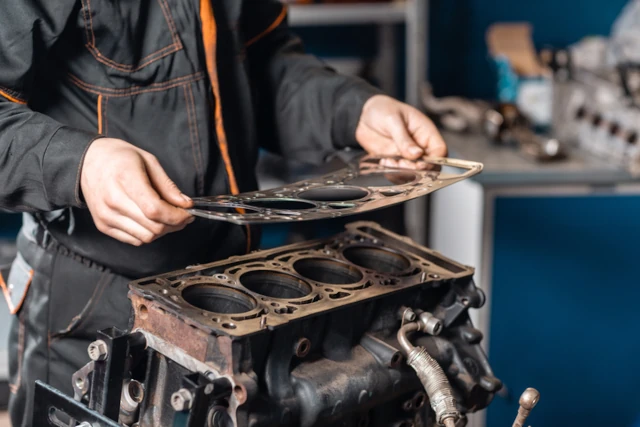
With the high costs involved in repairing a head gasket, it’s quite easy for a repair quote to push your car into the uneconomical to repair category. Once again, we turned to Matt Clamp for his expert opinion on whether repairing is worth it or not.
“Generally speaking, it’s only really worth repairing if you’ve got a newer car, it’s worth over £3,000 in good condition and generally working well with no other mechanical issues or underlying problems. Anything under £2,000, or a vehicle that has already suffered from recurring problems in the past, then don’t bother. Equally, if you’ve got a known problem engine like an early three-cylinder Ford EcoBoost engine or the Subaru EJ25 unit, then put the money you would spend on repairs towards a new, less troublesome car.”
Selling or Scrapping a Car With a Blown Head Gasket
If you’ve decided that you no longer want to deal with a car with a blown head gasket, you can choose to pass it on to someone else. You can either sell it “as-is” as a non-runner, or you can sell it for scrap at an Authorised Treatment Facility (ATF).
If your car is under 15 years old and is a more desirable model, then selling may well be a viable option for you. If you’ve got a fairly common vehicle (like a Ford Fiesta, Vauxhall Corsa or Renault Clio) with high miles, or the car has underlying issues, then the scrapyard is your best bet. If you’re in need of a quick sale and just want the car gone as soon as possible, then scrapping will be your best bet.
Here at Scrap Car Comparison, we have a network of buyers looking for cars in this exact situation, so we’re always perfectly placed to get you a sale instantly. Get a quote now and see just how much your car could be sold as either scrap or by selling for parts. In some cases, we could even get the process completed from quote to collection in under 72 hours!
Selling as a Non-Runner
If you opt to sell your car as a non-runner, then you’ll be selling it “as-is” or “sold-as-seen”. Be clear with your prospective buyers about the condition of the car so there are no shocks when they come to look at it or take it away, and so you’re not falling foul of the Consumer Rights Act 2015 or Misrepresentation Act 1967.
Many of our trusted buyers will be looking for cars just like yours to strip for parts, so get in touch today and we’ll find you an instant quote with free collection in no time.
Scrapping at an Authorised Treatment Facility
Scrapping a car at an ATF is the quickest and easiest way to offload a car with a blown head gasket. After you’ve completed the yellow section of the V5C logbook (“Selling or transferring your vehicle to a motor trader, insurer or dismantler”), your car will be taken to the facility and, following the depollution process, scrapped in its entirety. The ATF will also provide you with a Certificate of Destruction as proof it has been scrapped.
Tax Refunds and Private Plates
When you sell or scrap a car with a blown head gasket, your tax is automatically refunded for any full calendar months you have left on it. If you have any private number plates, make sure these are put on retention with a V778 document, or registered to another vehicle before you go through the process. Once the car is out of your possession, you will lose any attachment you had to that registration. If it’s sold, then you transfer ownership of both the car and the registration to the buyer. If it’s scrapped, then the number is permanently cancelled and deleted from the DVLA database.
More Information
FAQs
How long does it take to replace a head gasket?
A head gasket replacement will take at least eight hours, rising to potentially over 15, depending on the type of engine and how significant the damage is. A large portion of this time is spent stripping and then rebuilding the engine around the repairs.
How long do head gaskets last?
A head gasket should last the entire life cycle of a vehicle. This is regularly quoted as being 100,000 – 150,000 miles, or 10-15 years. Head gaskets rarely fail due to age alone, and it’s often because other components around it have failed.
What does a blown head gasket sound like?
A loud tapping or hissing sound from your engine can suggest a blown head gasket as gases begin to escape from the side of the engine block. You may also hear a bubbling or gurgling coming from behind the dashboard or under the bonnet as gas enters the cooling system and boils the coolant.
Be mindful, though, as sometimes a blown gasket makes no noise at all if the leak is purely internal. The first you’ll know about it is a misfire or the engine overheating.
Can a blown head gasket stop a car from starting?
Yes, if it is severe enough. A blown head gasket can cause a loss of compression and in certain cases hydro-locking, where fluid in the cylinders stop the pistons from moving. Hydro-locking is a major problem and can cause severe, and often unrepairable, damage to your engine.
Is a head gasket more expensive to fix on a diesel?
Generally, yes, a head gasket on a diesel-fueled vehicle will cost more to repair than a petrol engine. Diesels have higher compression ratios and greater thermal stress, meaning the increased pressure is more likely to cause the cylinder head to crack or warp. Fuel injectors often seize into the cylinder head over time, needing extra hours of specialist labour cost just to remove them.
Will a blown head gasket fail an MOT?
Almost always, yes. Any burning coolant or oil will produce thick white or blue smoke, resulting in an instant fail of your emissions and/or smoke tests. Any continuous fluid leak (which could be either oil or coolant in the event of a blown head gasket) is classed as a major fault and an instant fire. If the head gasket failure is causing a misfire, this could also make the engine management light come on, which is also an instant failure.