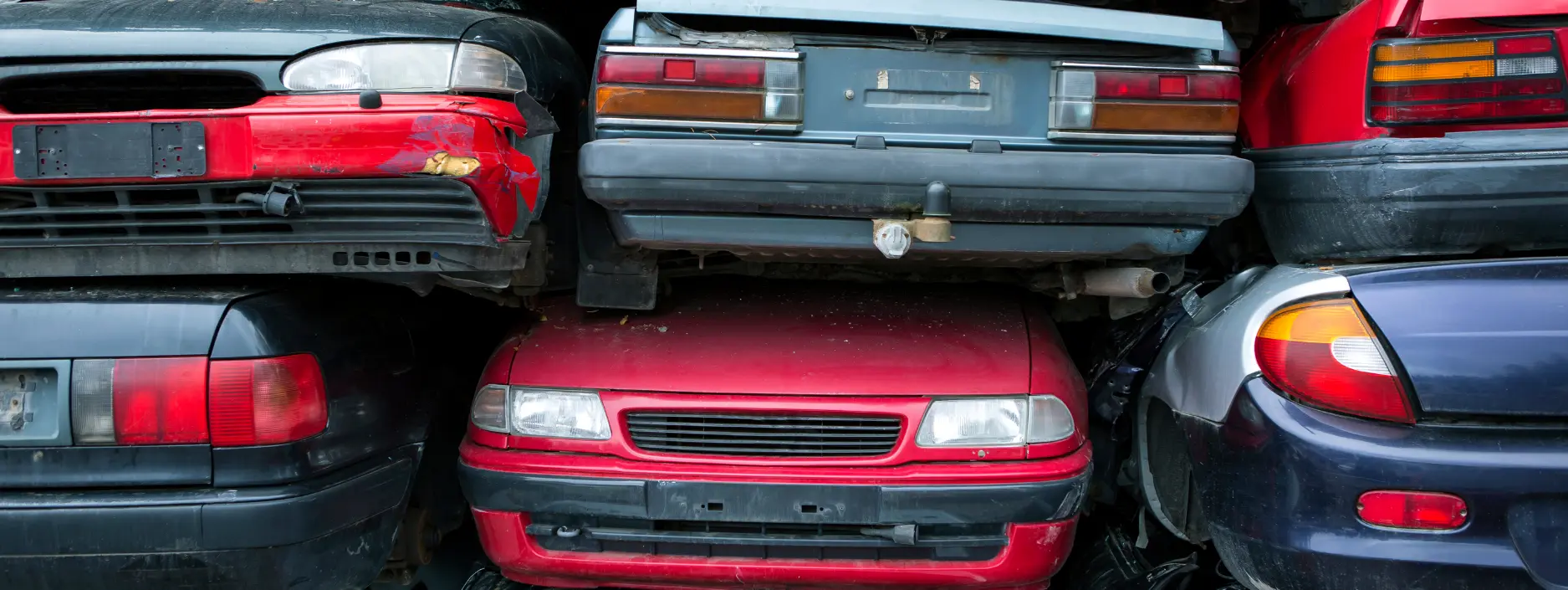
With costs increasing across the automotive industry, drivers want to spend as little on their car as possible after they’ve bought it. Reliability is a factor that people consider when deciding on their next car, now more than ever before. For a lot of motorists, it’s no longer about what brand looks the coolest or which car has the most cutting-edge gadgets… It’s simply about finding a vehicle that will keep on driving with the fewest number of problems.
Avoid any unexpected repair bills as Scrap Car Comparison analyses the most reliable cars in the UK today.
Key Takeaways
- Reliability is now a major factor in choosing a car as rising ownership costs make drivers more focused on avoiding breakdowns, repair bills, and time at the garage.
- Toyota stands out as the strongest reliability brand, with Japanese cars on-the-whole proving to be very reliable.
- Preparation is important when it’s time to purchase a car – know what to avoid, what to favour and how to spot a problem car before you pay for it.
- Maintenance is crucial to keeping your car going – even reliable cars need regular servicing, oil and fluid changes and battery care.

How Car Reliability Is Measured
Car reliability can be measured using data gathered from various sources. Driver surveys will collect personal opinions from vehicle owners to get firsthand reports of how reliable particular makes or models are deemed to be, but statistics can be analysed as factual evidence of which cars are more or less reliable.
Before we go any further, it’s important to understand that vehicle reliability does not mean your car is guaranteed to last longer than any other. Personal circumstances, including how well you look after your car and how often you drive it, will have an impact on how many years you get out of any vehicle.
Owner Satisfaction Surveys
These aren’t necessarily the kind of surveys you’ll be asked to fill in by the manufacturer after purchasing one of their cars, although those can give the brand an idea of where their vehicles could be improved.
These surveys are more often compiled annually by motoring news outlets and call on drivers of all sorts of cars to leave feedback on whatever vehicle they drive. Drivers will be asked what it’s like to own said car and to score it based on certain factors – for example, the driving comfort, the tech it uses and safety features, but more importantly, how many times it’s broken down and whether it feels like a high- or low-quality product.
Warranty & Repair Claim Data
Stats that tell us which specific models require the least amount of maintenance are available. Warrantywise.co.uk has published their own Reliability Index explaining which cars were statistically most reliable in 2025, even publishing the highest recorded repair cost for each model. The statistics take into account the average time spent off-the-road due to mechanical issues, costs of repairs, and average age & mileage.
Cold hard facts spell out which manufacturers are building more reliable cars, but you also must remember that the ‘#1 most reliable’ isn’t immune to breakdowns.
MOT Pass & Failure Records
The pass and fail rates of UK cars is another statistic it’s worth assessing to determine if a vehicle is reliable. That being said, you have to remember that passing or failing an MOT can often come down to how well, or how poorly, the car has been driven and maintained over the past 12 months. Whatcar.com has previously listed the most reliable cars on the market based solely on their MOT pass/fail rate, whilst also noting the average mileage of the cars being tested too.
Breakdown & Callout Data
Looking at which makes and models are being collected from the roadside after breaking down mid-journey can also help build a picture of the most reliable cars on the market. But once again, you have to take this data with a pinch of salt – a roadside callout could be down a punctured tyre or something else that’s not necessarily connected to the vehicle’s mechanical reliability.
The Most Reliable Cars In The UK Right Now
So which cars are the most reliable? We’ve looked at data from Woodson Cars, What Car?, Carwow and Auto Express to form what we believe to be a definitive list. What Car? uses data from their own customer survey, asking for details of any malfunctions over the past 2 years. Carwow took their results from Auto Express’s Driver Power 2026 survey which asks genuine drivers to score certain elements of the experience, one of which being ‘reliability and build quality.’
Bear in mind that all scoring is opinion-based, using data gathered from members of the public and dependent on their own personal experiences with their cars. The age of each vehicle driven by survey voters will be different, and newer cars should have less problems to report than older ones.
Here’s our list in full. There aren’t many surprises, really:
| Rank | Car |
| 1 | Toyota Aygo-X |
| 2 | Volkswagen T-Roc |
| 3 | Vauxhall Grandland |
| 4 | Toyota RAV4 Hybrid/PHEV |
| 5 | Tesla Model 3 |
| 6 | Mazda CX-5 |
| 7 | Toyota Corolla |
| 8 | Hyundai i10 |
| 9 | Kia EV3 |
| 10 | Mazda CX-30 |
| 11 | BMW 1 Series |
| 12 | Hyundai Santa Fe |
| 13 | Kia Nero Hybrid/PHEV |
| 14 | Mini Hatchback |
| 15 | Ford Kuga |
| 16 | Volvo XC40 |
| 17 | Honda Civic |
| 18 | Kia Ceed |
| 19 | Hyundai Kona Hybrid |
| 20 | Suzuki Swift |
Japan and South Korea are well-represented in our list, with Toyota, Hyundai and Kia all taking multiple spots. Such high praise for a Vauxhall in this day & age may come as a surprise, but both What Car? and Carwow place it in their own top-tens.
The Most Reliable Car Brands
Using the same methodology, we’ve listed what we believe are the most reliable car brands on the UK market:
| Rank | Brand |
| 1 | Toyota |
| 2 | Honda |
| 3 | Suzuki |
| 4 | Kia |
| 5 | Vauxhall |
| 6 | MINI |
| 7 | Tesla |
| 8 | Mazda |
| 9 | Hyundai |
| 10 | BMW |
Vauxhall’s appearance on the list is credited mainly to the Grandland, which scores very highly in individual model reliability. Suzuki, while generally reliable, is also boosted by the Swift. Toyota, however, is an all-rounder, with most of its vehicles scoring well.
The Least Reliable Cars & Brands
| Rank | Car |
| 1 | Nissan Juke Petrol |
| 2 | Land Rover Discovery |
| 3 | Volkswagen Tiguan (2024-) |
| 4 | BMW 7 Series |
| 5 | Mercedes S-Class |
| 6 | Audi A7 |
| 7 | Kia Sportage (2016-2021) |
| 8 | Mazda CX-60 (2022-) |
| 9 | Range Rover Velar |
| 10 | Range Rover Sport |
The Nissan Juke with a petrol engine goes down as the least reliable car on UK roads, but even when taking into account information from What Car?’s report and Warrantywise’s Index, three different Land/Range Rovers feature. These British cars break down often and when they do, they have very high repair costs.
Does Mileage Or Age Matter More?
The truth is, there’s no way to answer this question definitively. What we can do, though, is explain how both a vehicle’s mileage and age affect its reliability.
High mileage will put wear onto the actual mechanical parts that keep your car running. Stuff like your engine, your clutch, your brakes… mileage matters because it means all those bits have actually been putting in work.
Age on the other hand can affect your car even when it’s parked. Rubber seals will begin to deteriorate as the years go by, especially in bad weather, and metal might start to rust and corrode. Even plastic might crack or warp. Fluids and oils might not run out like they would in a high mileage car, but they will start to go bad and need to be replaced – many people overlook the fact that engine oil actually has a use-by date of sorts; it should be changed at least once a year, regardless of miles driven.
How To Check A Specific Car Before You Buy
Want to do your own research even beyond reading this comprehensive guide to vehicle reliability? You can do that. Here’s how:
Free & Paid MOT History Checks
The easiest to use MOT history checker that is actually free is operated by the government. This offers the most basic of details, including when it was MOT tested and if it passed or failed, with car records going as far back as 2005.
There are plenty of websites that offer free MOT history checks, but almost all of them aren’t really free. You’ll be asked to enter the vehicle registration in question, which is normal, but any important information, like service history or whether the car has in fact been written-off previously, will be hidden until you pay for a premium search.
That’s not to say you shouldn’t pay – in fact, a lot of these websites are completely legitimate and offer valuable insight into a car’s history that could make or break a sale. Just make sure you’re using a trustworthy site before you enter your card details.
Outstanding Recalls
Once again, Gov.uk is the place to go. The government website will ask for a vehicle reg to be entered. After it’s identified the vehicle, it will list whether or not there are any outstanding recalls on that particular car. If it has failed to find any information (meaning it can’t confirm or deny an outstanding recall) it will advise you to ask the manufacturer instead.
Service History & Cambelt Records
This can be done by using a free or paid-for vehicle history checker, but the simplest, most to-the-point way of learning this information about any car is to simply ask the seller to show you the service book or any receipts pertaining to work done on the vehicle.
The cambelt is just one part of the entire automotive machine, but it’s a very important one. It’s a pain to replace when it’s worn out and it’s downright disastrous if it breaks! If you see evidence that the cambelt in your potential future car has more than 100,000 miles on it already, you should definitely consider looking elsewhere… or at least asking for a reduction in the price.
Question To Ask The Seller
Every motorist’s personal situation will be a bit different, but some general questions to ask include:
“Can I see the logbook and service history?”
If they can’t or won’t present the car’s documentation to you, that’s a red flag. The car might have a list of secret mechanical problems, it might not have been serviced for years or worse… it might even be stolen.
“Has the cambelt/timing belt/timing chain been replaced?”
This is a big one because it’s a very expensive part to replace, and it can genuinely write-off some cars if it breaks during a drive.
“Are there any problems with the car?”
Can they lie about this? Of course. Counter that by asking to check the dashboard with the engine running for any warning lights.
“How did the last MOT go, and when is it due again?”
This is a great question to ask because you can verify their answer against the MOT records found online. If you find that they’ve lied about it, you should probably walk away. Who knows what else may be wrong with the car?

Keeping A Reliable Car Reliable
Even the most reliable cars will need some looking after. Keep a maintenance checklist, or they will start to show signs of wear & tear just like any other make or model would. Here’s how you keep even the best cars on the road for longer.
Servicing To Schedule
The absolute best bet for prolonging your car’s life is to service it when you’re supposed to. We know, it’s not cheap… but neither are the cars themselves. Do you really want to have to buy a whole new car after the head gasket breaks because you didn’t want to pay £200-ish for a service?
A car service will replace the fluids, oils, filters and other minor parts that aren’t built to last long-term. It will also safety-check your vehicle comprehensively; the brakes, electrical systems, wheels and suspension, to name a few, will all be assessed for any signs of damage or wear.
The recommended serving schedule for a full service is every 12 months or every 10,000-12,000 miles, depending on what comes first. If you want to be extra careful (or spend a little bit less money) you can choose the interim option instead for a less thorough service. This should be done every 6 months, or 6,000 miles. Some garages even offer a major service, which is recommended every 2 years, or 24,000 miles. This will do a very in-depth check and change all oils and fluids, but you should take into account the possibility of something going wrong in that 24-month period that you MOT may not catch.
Short Journeys & Battery Health
Really short trips of up to around 15 to 20 minutes can have a negative effect on your car. This is because the engine – or more specifically, the oils and fluids that the engine uses – don’t reach their optimal operating temperatures. Consequently, they remain thicker than they should be and can collect inside the engine as a sludge instead of running through smoothly.
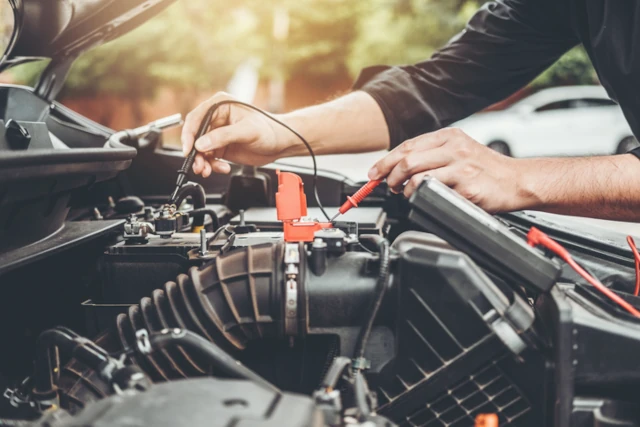
Your car battery won’t fare much better, either. Most of the strain on your car’s battery comes when you first turn the key in the ignition. Getting that engine running requires a lot of power, and it’s down to another part called the alternator to recharge the battery. The problem is, it can only do that while the car is running. So, if you’re tuning the car on for a quick 15-minute trip down the road, your alternator doesn’t have enough time to charge the battery up again.
You may have heard people say that taking a car on a long motorway drive at higher speeds can sort out a few problems – this is one of those cases.
Electric Vehicle Battery Health
EV and hybrid car batteries are a different matter altogether. While they do have standard 12-volt batteries – and these do regularly fail on electric vehicles, we’re not talking about those ones here. We’re talking about the massive, car-sized batteries that have replaced the engine entirely. They’re infamous for their life span which is not only quite short (around ten years) but is also pretty definitive – once that battery stops holding power, you might as well scrap the whole car because it’s almost always uneconomical to repair or replace.
Manufacturer Warranties & Extended Cover
Sometimes, things will go wrong with your car no matter how well you try to look after it. In the event of a crash, your insurance will have your back here. But when it’s a simple mechanical failure, warranty cover will ensure your vehicle is repaired at a reduced rate, or even free of charge.
Manufacturers will usually offer at least some standard warranty on a purchased vehicle, allowing you to return it to them for repair or replacement within a set time period. This is commonly 3 years (Ford & Vauxhall use this) but it’s a lesser-known fact that mileage can also impact a warranty – standard UK warranty will often expire after 3 years or 60,000 miles, depending on what happens first.
Extended cover is available through third-parties, but manufacturers themselves will also entice customers in with warranty that lasts much longer than 3 years. Hyundai, for example, offers a 5-year warranty plan, with no mileage limit, as standard. Meanwhile, Toyota will give their drivers a 10-year warranty as long as they get the car services at one of their own garages.
If you’re buying any car, regardless of manufacturer, check how long their warranty will have you covered for. Then, look through the Ts & Cs to make sure you’re not caught out by any hidden clauses that would prevent them from following through with repairs when you need them.
You should always remember the cover you have from the Consumer Rights Act 2015 too. The Motor Ombudsman explains that if your car has a major, demonstrable defect within 30 days of purchase, you will be entitled to a full refund from the dealer. If something goes wrong within six months, they are required to prove that the vehicle was of a satisfactory quality at the time of sale. They will be allowed one opportunity to resolve the problem through repair or replacement, after which you will be able to request a refund if they can’t resolve the issue. After six months it becomes your responsibility to prove that the vehicle was faulty when you bought it, which can be more difficult. Also, the manufacturer will not be held responsible if you bought the car from a third party dealership.
Reliability Records Across The UK
One way to get an idea of vehicle reliability based on UK location is to look at MOT pass rates in major cities. Here at Scrap Car Comparison, we compile our annual report that covers which cities scrap their vehicles with the highest average mileage, amongst other things. The Authorised Treatment Facilities (ATFs) we partner with deal with thousands of cars, so there’s a huge sample size.
According to our statistics, the top-five places in the UK for vehicle reliability and longevity are:
| Location | Average mileage |
| Belfast | 154,681 |
| Ipswich | 142,966 |
| Peterborough | 142,860 |
| Hereford | 142,122 |
| Northampton | 141,690 |
The location can impact the reliability of a vehicle in a number of way:
Lots of short city driving will have an adverse effect on the battery and engine, just like we discussed above, whereas spending a lot of time out in the countryside might also mean dealing with worse road conditions – potholes, debris and other problems that could increase wear & tear or cause physical damage to the car.
There’s also the possibility that your local mechanics aren’t doing their job properly. Our recent survey assessed which UK cities deemed their car garages to be the least trustworthy.
FAQs
What is the most reliable car ever made?
Is it any surprise that various Toyota models are considered for this title? Some people would say the Corolla is the king of reliability, but our in-house automotive expert in Scrap, Salvage and End-of-Life Vehicles Matt Clamp has strong praise for the Toyota Land Cruiser.
“The Toyota Land Cruiser is a great example of just how long a properly engineered car can last. The engines and gearboxes are incredibly reliable, and they’ve had years, even decades, of meticulous engineering from Toyota.
In my 10 years in the industry, I’ve probably bought more than 150 Land Cruisers and I’ve seen very few with engine faults. Even those that did have engine issues had already done more than 250,000 miles.”
Which Cars Last The Longest?
The clever answer here is “the ones that are looked after the best” because truly any vehicle can survive a long time if it’s regularly maintained.
However, here’s some more advice from Scrap Car Comparison’s Scrap, Salvage and End-of-Life Vehicles Matt Clamp:
“If you’re looking for something you’re going to use for years and run into the ground, older and simpler vehicles can have an advantage too. Modern cars have so many more features, emissions systems and warning systems, which means a lot more wiring and, by proxy, more that can potentially go wrong. Older cars with fewer features can often be much easier to work on and fix.”
Are Japanese Cars More Reliable Than European Cars?
Generally, yes. Some European cars have terrible reputations for reliability, with French manufacturers being the butt of many car-related jokes. But it’s actually British-built cars that are now considered some of the worst on the market. Warrantywise published data suggesting that of the 10 least-reliable cars they assessed, FIVE of them were Land Rovers, with the once-iconic Discovery taking the top spot.
The Germans did poorly here, too. The other five spots in the top-10 table were made in Deutschland – an Audi, a Mercedes and three BMWs.
However, Europe also has brands like Skoda and Volvo, the latter of which has a great reputation historically whilst the former is just starting to prove itself.
Still, Japan’s good reputation comes with good reason. Four Toyotas and two Suzukis take spots in their top-10 most reliable table. It’s also worth noting that two Kias from nearby South Korea are also in there, boosting the rep of East Asian car making on the whole.
Throwing a spanner in the works though, the Peugeot 108 and the Citroen C1 appear on the list. Maybe there’s hope for French cars yet…
Do Reliable Cars Hold Their Value Better?
Yes, cars that are known to be reliable hold their value and depreciate slower because there is more demand for them on the resale market. Even as the miles on the clock increase, there will still be people looking to purchase them.
Is An Automatic Gearbox Less Reliable Than a Manual?
The reliability of the two is pretty close. The only noteworthy difference here is that manuals are cheaper to replace or repair because their mechanisms are less complex. However, a manual car will wear out the clutch faster than an automatic.
Can A Car Be Reliable And Still Fail Its MOT?
Absolutely. You can’t just buy a Toyota and expect to breeze through its MOT test every single year. Regardless of make or model, you will still need to maintain it. That means getting it serviced, keeping an eye on oil/fluid levels and tyre tread, and generally driving it sensibly.
Sources:
https://www.woodsoncars.co.uk/blog/most-reliable-used-cars-uk-2026-top-10-dependable-cars
https://www.whatcar.com/news/most-reliable-cars/n27337
https://www.carwow.co.uk/news/10931/10-most-reliable-cars-driver-power-2026-survey
https://www.autoexpress.co.uk/best/most-reliable-cars
https://www.warrantywise.co.uk/warrantywise-used-vehicle-reliability-index-2026/