What is the End-of-Life Vehicle Directive?
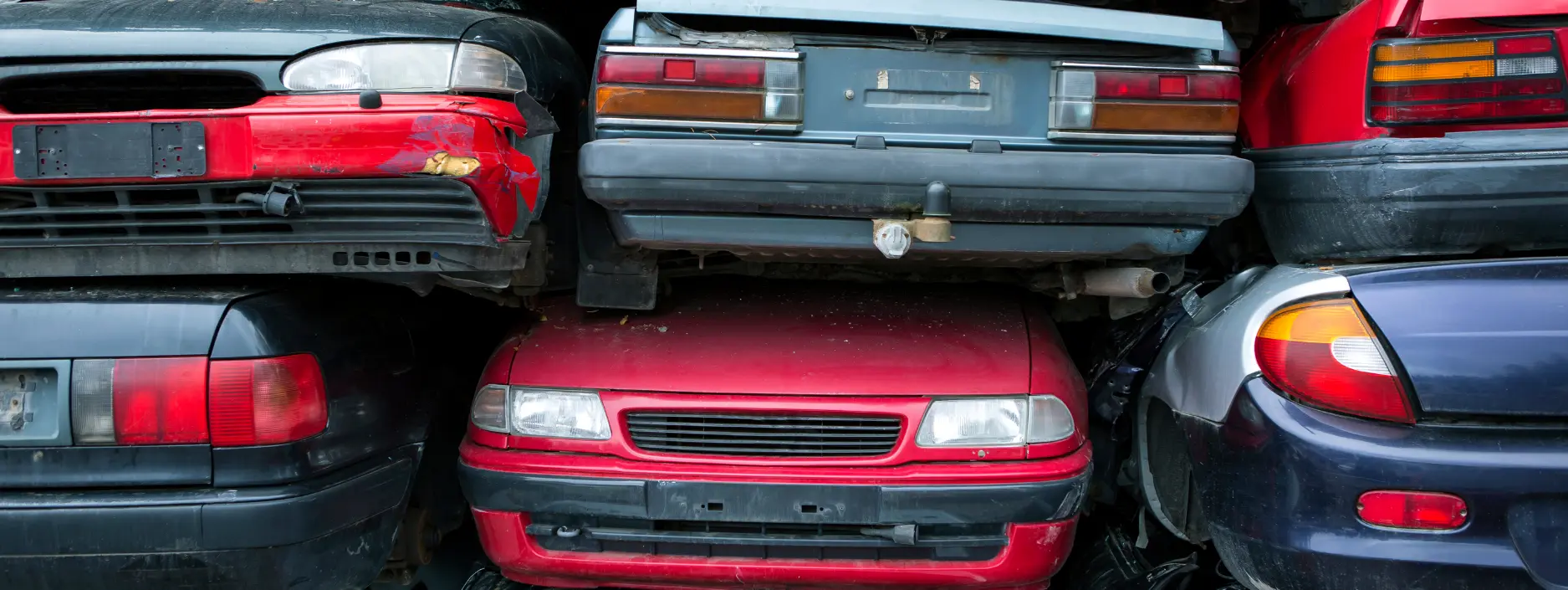
The End of Life Vehicles (ELV) Directive is a Directive (the official name of a legal act) of the European Union specifying how vehicles must be dealt with when they reach the end of their usable life. This directive was implemented to tackle the colossal amount of waste from scrap vehicles, which at the time was between eight and nine million tonnes annually.
The Directive was the first waste directive from the EU to bring in “extended producer responsibility” (EPR), where manufacturers need to also take into account the total environmental costs of a product throughout its entire life cycle into the market cost for that product.
 If you’re looking to scrap your car privately or get further information on the process in general, here’s a few other articles that could help you out.
 If you’re looking to scrap your car privately or get further information on the process in general, here’s a few other articles that could help you out.
How does the ELV Directive Work?
The EU’s ELV Directive achieves its goals with a number of specific aims, including:
- Manufacturer Responsibility
All vehicle manufacturers must have an authorised take-back facility for their vehicles when they have reached End-of-Life status. This also applies to vehicle importers. For most, a vehicle will only qualify for free take back if it is complete (including major parts like engines or catalytic converters) and free of any additional waste.
- Restriction of Hazardous Materials
The ELV Directive restricts the use of heavy metals such as cadmium, lead or mercury in new vehicles to ensure recycling is much safer when the vehicle reaches ELV status.
- Authorised Treatment Facilities (ATFs)
All vehicles must be taken to ATFs in order to be recycled safely. Items such as fluids, batteries and air bags will all be de-polluted before they are recycled.
- Recycling and Recovery Targets
There are strict targets that manufacturers must hit to be in line with the ELV directive. This includes 95% recovery and 85% recycling by weight.
- Certificate of Destruction
A Certificate of Destruction must be provided once a vehicle has been depolluted to ensure it is both deregistered and disposed of safely and correctly.
Does the ELV Directive apply to UK drivers?
Despite Britain’s withdrawal from the European Union in 2020 following the 2016 Brexit referendum, the ELV still remains incredibly relevant to those in the UK. While the directive predominantly focuses on instructions for vehicle manufacturers, the impact of it is passed down to vehicle owners in the UK. The Directive ensures that there are safe and legal courses for the owners of end-of-life vehicles and they are covered in each step.
For example, if the car is complete (with key components such as engine, gearbox and catalytic converter), it can be taken to an approved location as part of a free take-back service.
UK drivers must also ensure that if they scrap their car they do so with an approved ATF, and receive a Certificate of Destruction once it has been disposed of.
What is the future of the ELV directive in the UK?
When Britain left the EU, the core principals of the ELV directive were signed into UK law. This means that the existing regulations will now continue to be enforced in Britain. However, the UK will not automatically adopt any new stricter EU regulations as a result of Brexit after it rejected “dynamic alignment”.
The EU is gearing up to replace the Directive with a new Regulation, which will see the rules expanded to encompass heavy-duty vehicles and motorcycles, as well as tighter restrictions on batteries. Instead, the UK is currently conducting its own review of the regulations, the results of which are expected sometime in 2026 or 2027.
Although there will not be an automatic adoption of updated EU regulations, it is expected that the new UK review will align with circular economy goals and extended producer responsibility.
Scrap a Car in Your Area
Scrapping an old car doesn’t have to be stressful. Scrap Car Comparison can get you a great price and quick, free collection. Get an instant quote now or browse our scrap locations.
Car Scrapping Knowledge Hub
Everything you needed to know about scrapping an old, written by the experts. Get step by step guidance to everything from payment, collection and paperwork.
Value your scrap car
Calculate the scrap value of your car. Get an instant price online and learn how to get the most value.
How to scrap a car
Find out the exact documents and paperwork you’ll need, how to scrap a car and how to get the best price.
Scrap without a log book
Why is the V5C log book so useful when scrapping your car? And can you still scrap a vehicle if you don’t have one? Find out with this guide.
DVLA scrapped car
How to notify the DVLA when you scrap your car – plus everything else you mustn’t forget! Here’s our simple online guide.