Key Takeaways
- MOT Class 4 vehicles (most cars fall into this category) take 45 to 60 minutes, but you should expect to be without your car for up to 90 minutes when paperwork and ramp/technician availability is considered.
- Failing the test won’t always cost you a fortune or leave you without a car for days. Repair work can be done the same day, or you can bring the car back the following day – it can still be retested for free.
- Northern Ireland’s test process takes the same amount of time, but bookings can take weeks.
- If repair work is going to cost around the same as what your car is valued at, it’s time to consider whether it’s worth the investment. It might be time to get a scrap quote.

How Much Time Does An MOT Test Take?
You might expect to have to sit in the garage waiting room for half a day. You might have heard horror stories of the MOT test uncovering a list of mechanical problems as long as your arm. Scrap Car Comparison is here to set things straight.
A typical MOT test takes between 45 minutes to one hour. The type of vehicle can influence the time it actually ends up taking, with bigger cars or vans sometimes taking more than an hour. You also have to factor in the completion of paperwork, which is generally pretty straightforward for an experienced MOT tester, but needs to be done ‘by the book.’
Test Times By MOT Class
| MOT Class | Vehicle Type | MOT Time |
| Class 1 | Motorbike (under 200cc) | 30-45 minutes |
| Class 2 | Motorbike (over 200cc) | 30-45 minutes |
| Class 3 | 3-wheelers (up to 450kg unladen) | 45-60 minutes |
| Class 4 | Cars, small vans, 3-wheelers (over 450kg), motorhome/minibus (up to 8 passengers) | 45-60 minutes |
| Class 4a | Motorhome/minibus (9 to 12 seats) | 45-60 minutes |
| Class 5 | Motorhome/minibus (more than 12 seats) | 45-90 minutes |
| Class 5a | Motorhome/minibus (more than 12 seats & extra seatbelts) | 45-90 minutes |
| Class 7 | Commercial goods vans/trucks/lorries (3,000-3,500kg) | 45-75 minutes |
Cars & Small Vans
The average time for these Class 4 vehicles is 45 to 60 minutes. Since these are the most common motors on the road, any generalised information you see about MOTs usually refers to Class 4.
Motorcycles & Three-Wheelers
Motorcycles will either come under Class 1 or Class 2, depending on their engine power. Any 2-wheel vehicle with an engine up to 200cc in size counts as Class 1, while bikes above 200cc are Class 2. Both Class 1 and Class 2 MOT tests can take between 30 to 45 minutes. Their smaller size means there are simply fewer parts to test, resulting in a faster testing time than a car or van test.
Three-wheelers might be rare on UK roads, but they actually have their own MOT testing class – Class 3. These three-wheel vehicles have an unladen weight of up to 450kg and their MOT test takes roughly 45 minutes to an hour to complete. Any three-wheelers that weight more than 450kg unladen are considered Class 4, but their test also takes 45 to 60 minutes to complete.
Interestingly, motorbikes with sidecars aren’t considered three-wheelers or four-wheelers – they are tested as Class 1 or Class 2 bikes.
Larger Vans
Goods vehicles and other heavy vans with a gross weight between 3,000kg and 3,500kg fall into Class 7. These vehicles typically take longer during an MOT test, but could still be completed in as little as 45 minutes, and at worst shouldn’t take more than 75 minutes. We mentioned that bikes take less time because they’re smaller. Well, it’s the opposite here – vans and lorries take longer because they’re bigger.
Their size means that they need more rigorous testing around their brakes and structural integrity to ensure they are safe, not only for the driver but also for other road users to share the tarmac with.
Motorhomes & Minibuses
Motorhomes and minibuses take different lengths of time depending on their MOT Class. Class 4 vehicles take 45 to 60 minutes, meanwhile Class 5 vehicles can take up to 90 minutes.
Your motorhome or minibus is MOT Class 4 if it seats up to eight passengers and isn’t used to carry goods in the same way a van or lorry would be.
If it has nine to 12 seats, it’ll have extra seatbelts which need to be tested individually. That means it falls into Class 4a. These vehicles take about the same amount of time – a little bit of extra time will be required for the additional seatbelt tests.
Any motorhome or minibus that has 12 or more seats will fall into Class 5, but if there are any extra seatbelts fitted into these vehicles for any reason, it gets placed into Class 5a.
Class 5a vehicles can also take up to 90 minutes. They might be about the same size as a Class 7 van or lorry, but these massive motorhomes and minibuses are fitted with the same gear as a car… except they’ve got around three-times as much of it. More seats, more seatbelts, more parts to be tested. All that adds up, resulting in a test that could take up to an hour-and-a-half.

What Happens During An MOT Test?
Your vehicle will be put through a series of tests. The parts of the test are the same for every vehicle in its class, regardless of make and model. For example, a Vauxhall Corsa will be tested on the same things as a Range Rover.
The MOT Test Checklist
The following list covers everything that the MOT tester will check on your car. These bullet points are taken directly from the VT29 checklist form that your tester will use. They’ll simply tick a box for ‘pass’ or ‘fail’ for each item, but there is extra space available for them to note down details about defective parts.
Exterior checks
- Registration plates
- Lamps, registration plate lamps
- Indicators, hazards
- Headlamps & aim
- Stop lamps, fog lamps, reflectors
- Wheels, tyres
- Shock absorbers
- Mirrors, wiper blades, fuel tank cap
- Glazing (Class 5 only)
- Doors, boot lid, loading doors, bonnet
- Towbars
- General condition of body
Interior checks
- Seats and seatbelts
- Warning lamps
- Switches (position lamp, headlamp, hazards)
- View to front, wipers and washers
- Brake controls, servo operation
- Steering wheel and column
- Doors, mirrors, horn
- Speedometer, driver controls (Class 5 only)
Under bonnet checks
- Vehicle structure
- Braking systems
- Exhaust systems, fuel system
- Speed limiter (if applicable)
- Steering & power steering components
- Suspension components
Under vehicle checks
- Steering including power steering
- Drive shafts (if applicable)
- Suspension, shock absorbers
- Wheel bearings
- Wheels & tyres
- Brake systems & mechanical components
- Exhaust system
- Fuel system & fuel tank
- Structure, general vehicle condition
- Emissions
Your brakes will also be rigorously tested, but their results are recorded slightly differently. Your service brake (that’s the main, pedal-operated one) will be tested on how each individual wheel reacts to its usage. The “braking effort force” will be marked down – this is a measurement of how much stopping power each wheel produced – and it will also be noted if the wheel locks.
The same will be done for the parking brake (handbrake) as well, followed by a measurement for imbalance. In vehicle braking, imbalance refers to brakes that aren’t braking with equal levels of stopping power. This can be a very dangerous problem because, in an emergency stop situation, your vehicle will not stop in a straight line.
These results will then be summarised and combined with the previous list items to determine if your vehicle has ultimately passed or failed its MOT test. Any advisories will be listed so you’re aware of problems that might appear in the near future, as will minor defects that won’t result in a fail but should be repaired soon.
If your car has failed, the problems will be classified as major defects or dangerous defects. Major defects are serious issues with your car that need repairing before a retest. Dangerous defects are even worse and mean your car is not roadworthy, so you can’t even drive it away from the garage until it’s fixed!
What An MOT Does Not Cover
Surprisingly, there are some very important parts that are not assessed in an MOT test. These include:
- Clutch
- Gearbox
- Internal engine components
Generally speaking, the MOT test is only concerned with vehicle safety, not vehicle performance.
What Makes An MOT Take Longer?
Certain condition can extend the length of your MOT test. Let’s look into them.
Vehicle Age & Condition
Older cars with more wear-and-tear can take longer to test because their parts will need to be examined more closely. Rust patches will need to be assessed and components that have done a lot of miles often won’t be as simple to sign off as passable.
Newer motors, on the other hand, can also take slightly longer if they’re packed full of complicated, high-tech electronics. The emergence of electric vehicles, for example, has been particularly tricky for a lot of garages.
Garage Workload & Ramp Availability
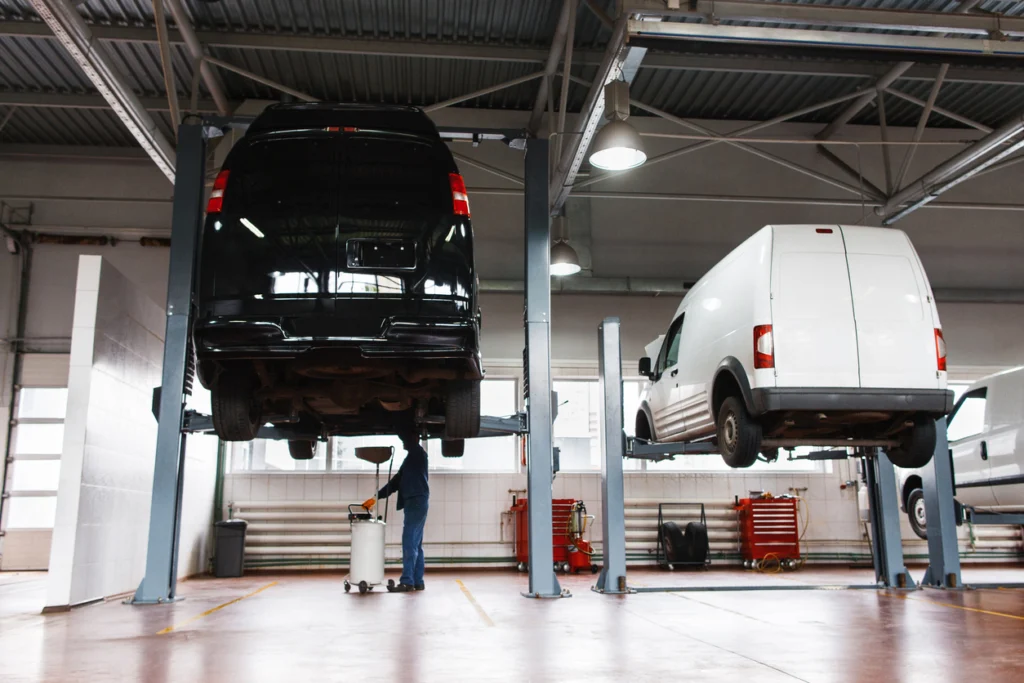
The problem here is not necessarily that your MOT test itself is taking longer than it should. Instead, if the test centre you’ve taken it to is extremely busy, your car might just be sitting around not being tested! They can only work on so many cars at one time, and your vehicle will need to be put onto the ramp (the lift that raises it into the air) to be tested. If the garage only has two ramps, it can only test two cars at the same time.
Modifications & Access Problems
Modified vehicles can take longer to MOT simply because the tester can’t assess the modified parts or areas of the car as easily as they usually would be able to. This could be down to access problems, like if a modification hinders the tester’s ability to easily reach a certain part of the vehicle. Or, it could be because the modification works differently to how the standard factory components work so testing it becomes more difficult.
Time Of Day & Time Of Year
This is another one that can impact the amount of time your car spends at the garage, rather than how long the test itself actually takes. Peak times annually are March and September. Why? Because that’s when the newest number plates are released onto the road (e.g. September 2026 introduces 76-plate cars) and, three years later, all of those vehicles need their first MOT. That surge in new cars requiring MOTs can cause a bit of a bottleneck.
There isn’t exactly a busiest time of the day, but you’ll find that many people will try to get their vehicles in as early as possible to ensure any required repairs can be completed the same day.
Does A Fail Make The MOT Test Take Longer?
Yes, failing the MOT test will make it take longer overall because the vehicle will need to be repaired in some way, then retested.
If your car fails in that first 45 to 60 minute MOT test timeframe, you’ll be presented with options of what to do next. Depending on the cause of the fail and how long your existing MOT had left until it expired, you might be able to take the car away and come back another day. However, if your vehicle has been deemed to have a “dangerous defect” then you won’t be allowed to drive it away at all. It will need to be repaired (which could take a day or two for massive jobs) before being retested.
How Long A Retest Takes
Partial & Full Retests
A full retest covers everything from top to bottom all over again. This might be done if there were multiple major problems with the vehicle or if you’ve missed the time window for a retest (10 working days).
The Next Working Day Rule
Leave your vehicle for repairs at the same test centre or take it back to the following working day and your partial retest will be free.
The Ten Working Day Window
Take it back to the same test centre within 10 working days and you’ll still be eligible for a partial retest, instead of requiring a complete retest from scratch. You may, however, have to pay a partial fee for this. Typically, it’s 50% of the original charge.
What A Retest Costs
As we mentioned above, bringing your car back in can be free, can require a partial fee, or you might need to pay the fee in full all over again.
Returning the vehicle to the same test centre, within one working day, for a partial retest is completely free.
Coming back within 10 working days for a partial retest can cost up to £27.43. This is half of the maximum MOT fee.
A full retest, regardless of the time frame, will cost you up to £54.85. This is the highest figure a garage can charge for an MOT, whether that’s an initial test or a full retest. Any garage charging more than this is breaking the law.
How Much Time Repairs Add On
This all depends on the scale of the repair job that’s required. You can fail an MOT on a broken windscreen wiper or a dead lightbulb. Those repair jobs will take minutes, if not seconds and will likely be completed the same day. But something bigger, like brake discs? A job that size could take four hours or so. If your garage fails your car, they’ll tell you why. Before asking them to proceed with the repair work, it’s a good idea to ask them how long it will take… if only because it might also impact how much it costs!
Waiting For Parts
It’s unlikely that any garage will stock every single part that your car could possibly need replacing. As such, you may have to wait for parts to be delivered. Don’t panic – the garage will have connections to the local parts shop (usually they’re on the same industrial estate!) so delivery can take just a few hours sometimes. If it’s a really unusual repair job though, it could take longer.
Taking The Car Elsewhere
Naturally, taking the car somewhere else might be faster if one garage has the availability to do the job that day instead of the next. Just bear in mind that you won’t get your free or partial retest if you go elsewhere.
Is It Always Worth Repairing & Retesting?
Sometimes, a car is so old, worn-out, damaged or broken that it’s just not worth paying for the repair work to be carried out. In this case, you’re better of scrapping or salvaging the vehicle. But how do you know when that time has come? Here’s some advice from expert Tim Singer, mechanic at BMS Cars:
“Some drivers spend a fortune on having welding, suspension, clutch and flywheel work carried out before having their MOT done. If in doubt [about passing] have the test done first.”
With retests possibly being free, following this advice could save you from spending money on work that wasn’t actually required to pass the test.
Tim also talks about the emissions test, another part of the MOT that can be an unexpected cause of failure, saying that some drivers pay out for huge repair jobs “only to find that the exhaust emissions are so high that a pass is completely unachievable.”
If you’re at the point where scrapping is a more viable option than repairing and retesting, Scrap Car Comparison will get you a quote for your car in seconds.
How Long Does An MOT & Service Take?
It’s often recommended to get your vehicle serviced at the same time as the MOT is done. If you go for an interim service, the combined timescale is one to two hours. A full service offers extra maintenance, but could push it up to three hours.
More Information
Scrap Car Comparison has plenty more advice on how to help your car through its next MOT:
- Will A Car Fail An MOT With Its Engine Light On?
- What To Do If Your Car Fails Its MOT On Emissions
- The Most Common MOT Fails & How To Avoid Them
How To Make Your MOT Quicker
You can speed up your MOT by making sure your vehicle passes first time and preparing adequately for failures.
Checks To Do Before Your MOT Test
Get your car ready to pass its MOT by working through your own pre-MOT checks of possible failures, which should include maintaining your:
- Lights – check that every bulb still works
- Horn – check that it works
- Windscreen – check it for cracks or dirt that would obscure your view
- Wipers – check that they work
- Oil and fluid levels – top up any that are low
- Tyre tread – check the tread depth is above the legal pass minimum (1.6mm)
- Seatbelts – check them for damage
Choosing A Garage That Repairs On-site
If your car does fail its MOT, it’ll need repair work done in order to eventually pass. To speed up the process, even in the event of a test fail, you’ll want to choose a garage that has the capability to repair your vehicle as soon as possible. Before booking in the MOT, you’re welcome to ask them about the possibility for same-day repairs just in case they’re required.

MOT FAQs
Can I get an MOT done the same day I book it?
Yes, the only requirement for this is finding a garage that has availability. It is completely possible to drive to a garage and ask for an MOT right there on-the-spot, though due to the time limit on your existing MOT, it’s recommended to book in advance.
Do I need to bring my V5C logbook to the MOT?
No, unless it’s the vehicle’s first ever MOT (or first MOT after changing the registration plate number).
How long does it take for an MOT pass or fail to show up online?
This will happen instantly. In fact, the test result will often appear online even before the tester has told you face-to-face!
Can you wait while an MOT test is being done?
Yes. Most garages will have a waiting room with basic facilities (toilets, Wi-Fi, tea & coffee) and even a viewing area to watch the test being undertaken.
Does a mobile MOT or collection & delivery service take longer?
The test itself won’t take longer, but the overall time without your vehicle might be longer. Bear in mind that a ‘mobile MOT’ doesn’t involve somebody testing your car right on your driveway – they need a ramp lift, remember. Instead, they will take your car away to a garage for testing and return it upon completion. So, it’s likely that the entire process will indeed take a bit longer.
References
MOT checklist: https://assets.publishing.service.gov.uk/media/685580b45225e4ed0bf3ce8e/mot-inspection-checklist-vt29.pdf