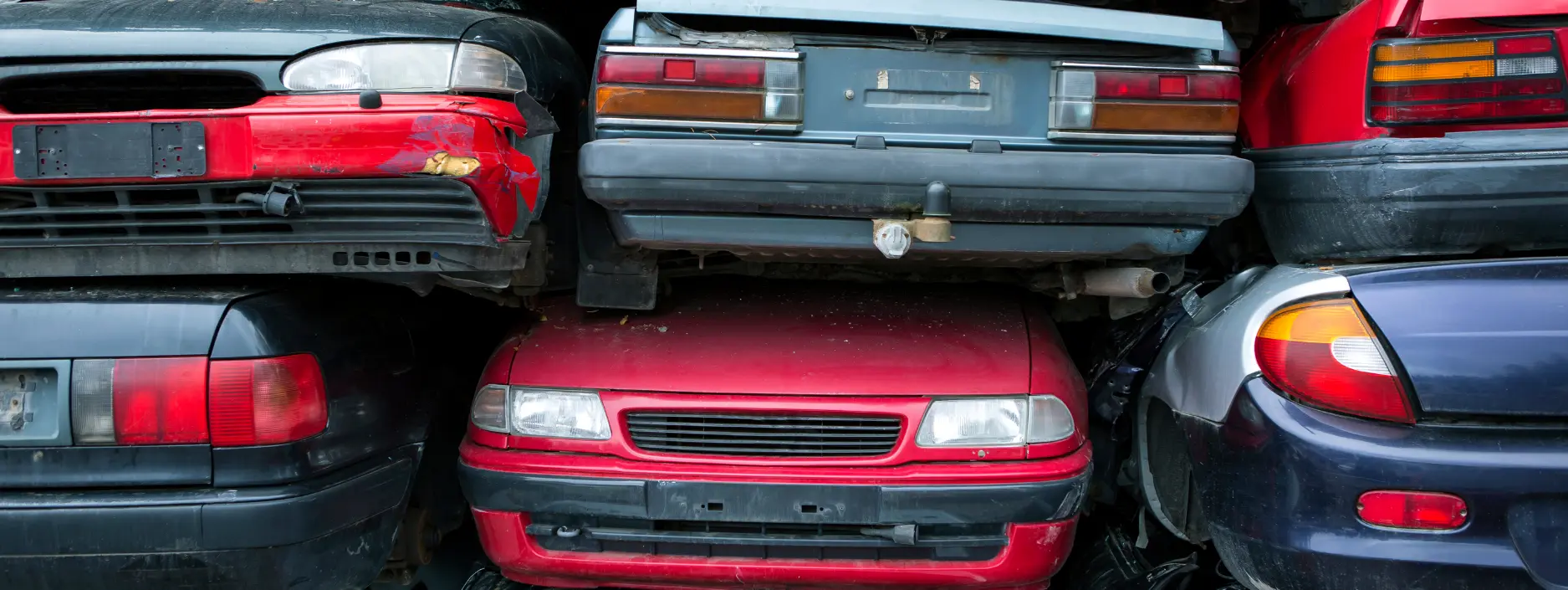
How to tell if a car is abandoned
Contrary to popular opinion, there is no verbatim legal definition of an abandoned vehicle. It is instead decided by the local authorities providing it meets certain criteria. This criteria is laid out on the gov.uk website, and are as follows:
- It has no keeper on DVLA’s database and is untaxed
- It has been stationary for a significant amount of time
- It is significantly damaged, run down or unroadworthy. This could include having flat tyres, missing wheels or broken windows
- It has been burned out
- It is missing a number plate
The general rule of thumb is to use your common sense when looking at a car to decide if it’s abandoned or not. Just because a car has a flat tyre or a broken window doesn’t automatically mean it’s abandoned – it could have suffered that fate that morning or the previous day and the owner is still awaiting help from breakdown services for example.
It’s also easy to check online if your car has been taxed or not. The DVLA’s own tax checker is incredibly simple to use, providing you have the vehicle’s registration number to hand.
If you’re convinced the car you have seen has definitely been abandoned, then your next step will be to report it to the relevant authorities.
Who to talk to about abandoned cars
If you’re absolutely certain you’ve found an abandoned vehicle, then you must contact your local council. If you’re unsure which council the car you’ve found falls under – perhaps you’re on holiday or on a border – then you can check this online, too. The Government’s ‘report an abandoned vehicle’ page allows you to input a postcode and see which council needs to be contacted regarding the vehicle in question.
If the vehicle has been left in a dangerous place or in a dangerous condition, then you should contact the police on 101.
Remember, if the vehicle is on private property, then you should speak to the owner of the land. However, do bear in mind that they’re probably aware of it and you could be setting yourself up for an uncomfortable conversation.
 For more information on the legalities of scrapping, or vehicles that have been abandoned, have a look at these.
 For more information on the legalities of scrapping, or vehicles that have been abandoned, have a look at these.
How to deal with an abandoned car
If the car is in a public place, then you should have nothing to do with it past the point of contacting the relevant authorities. If the car is on private land that you do not own, then aside from a calm chat with the land owner, there’s not a lot you can do at all.
If a car has been abandoned on your private land then you’re actually potentially in a sticky situation. You will become an “involuntary bailee”, which means that the car falls under your possession without your consent. Unfortunately for you, it’s not simply a case of getting rid of it, and doing so without taking relevant steps can actually land you in more trouble.
Before reporting a car abandoned on your land, you must have made every effort to get in contact with the owner. Once you’re certain that the owner is not forthcoming, then you can contact your local council and arrange for it to be removed – you must also give permission to the council to access your land before this can take place. After you’ve contacted them the council will place a notice on the vehicle, usually between 7-15 days, before they come to remove it. In many cases, the council will charge you for the cost of removing and storing the vehicle.
Although this can be a long winded and frustrating ordeal, don’t be tempted to just tow it away yourself. If any damages are caused, you are considered liable and will be charged accordingly.
How to legally scrap an abandoned car
For an abandoned car to be scrapped within all legal frameworks, you’ll need to make sure you’ve followed everything we have discussed above. Notably the following:
- If the car is on your private property, you will have had to have made every effort to contact the owner to have them remove the car of their own volition. It is good practice to document every attempt so you can prove you have made enough attempts before taking action.
- Report the car to the relevant local authority, unless it is obstructing the road or in a dangerous condition, when you should call the police on 101 instead.
- If you have been given the authority to scrap the car (if the car is on private land and the council can’t come to you), then you’ll need to take it to a registered Authorised Treatment Facility (ATF) to be disposed of in line with all current regulations.
- Receive documentation at every stage possible, ensuring you get proof when the vehicle is scrapped, such as a Certificate of Destruction for the vehicle.
What NOT to do
It can be very tempting to just get rid of a car that’s in the way, creating an eyesore on your road or dumped on your property, but doing so can result in major legal headaches. Never be tempted to just tow it away and get rid of it. While the vehicle on your land technically is your responsibility, you are not the owner and any damage caused will see you liable and subject to any fines or penalties as a result. You could even be charged if you’ve scrapped someone’s car without contacting them first.

Scrap a Car in Your Area
Scrapping an old car doesn’t have to be stressful. Scrap Car Comparison can get you a great price and quick, free collection. Get an instant quote now or browse our scrap locations.
Car Scrapping Knowledge Hub
Everything you needed to know about scrapping an old, written by the experts. Get step by step guidance to everything from payment, collection and paperwork.
Value your scrap car
Calculate the scrap value of your car. Get an instant price online and learn how to get the most value.
How to scrap a car
Find out the exact documents and paperwork you’ll need, how to scrap a car and how to get the best price.
Scrap without a log book
Why is the V5C log book so useful when scrapping your car? And can you still scrap a vehicle if you don’t have one? Find out with this guide.
DVLA scrapped car
How to notify the DVLA when you scrap your car – plus everything else you mustn’t forget! Here’s our simple online guide.